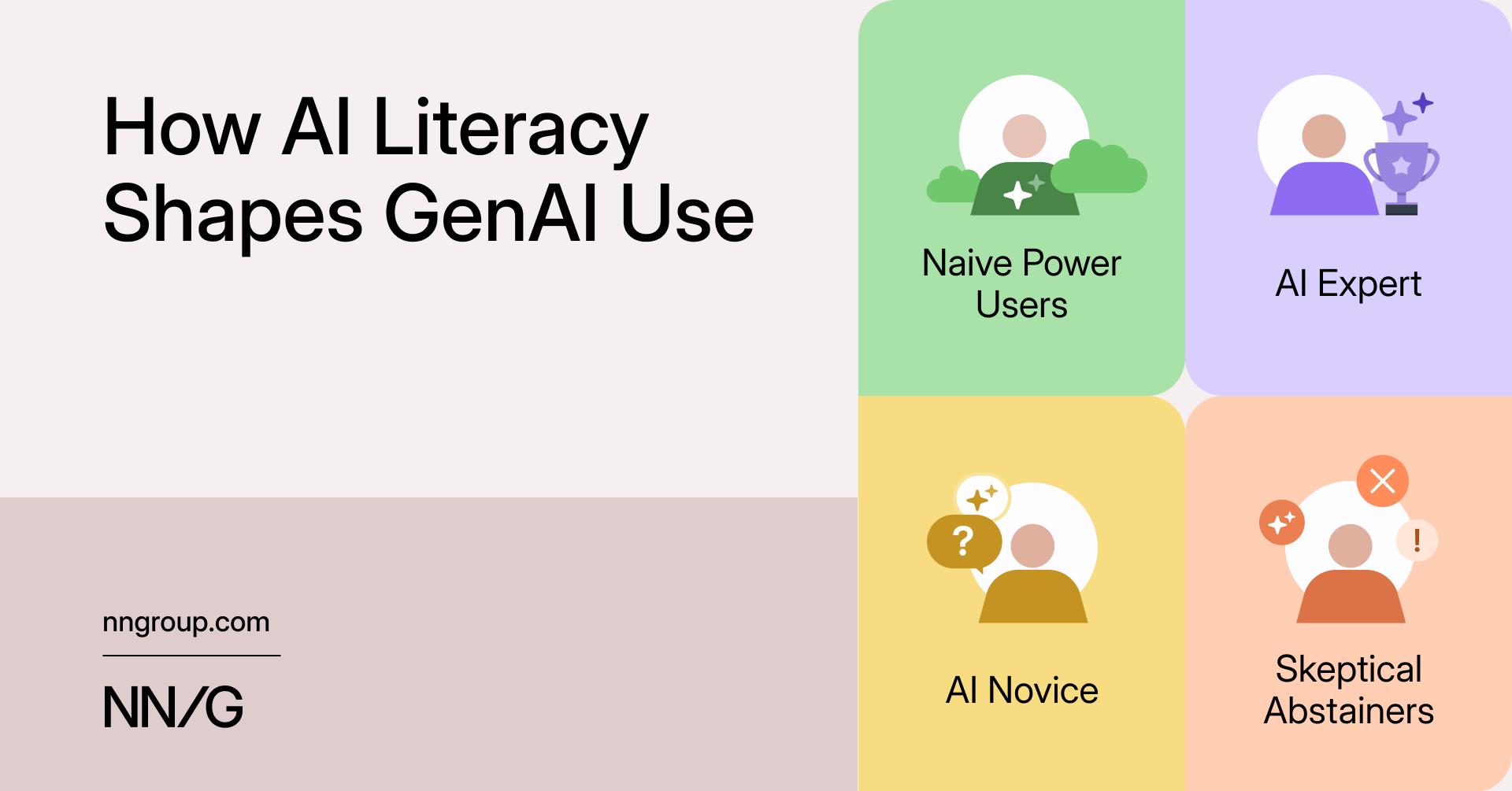
How AI Literacy Shapes GenAI Use

How AI Literacy Shapes GenAI Use

Here's something that might surprise you — using generative AI doesn’t automatically mean you’re doing it well. According to Maria Rosala, a UX researcher, AI literacy now means more than just knowing how to type prompts. It’s about understanding how to craft those prompts and critically evaluate the outputs. As Rosala points out, many people jump into tools like ChatGPT without the skills to really leverage their full potential. And here’s where it gets interesting — she emphasizes that tech-savvy folks often assume everyone’s on their level, but that's not the reality. For most users, AI literacy is a new layer of digital skills that’s crucial for inclusion and support. So what does this mean for you? If you want to make smarter decisions and get better results, it’s about becoming fluent in both asking the right questions and judging the answers. The takeaway? As AI continues to shape how we search, create, and communicate, developing these skills isn’t optional anymore — it's essential.

Course_Cards-1_1gCOUJz.png

Summary: Using generative AI often doesn’t mean using it well. AI literacy requires both prompt fluency and the ability to assess outputs.


In my career as a UX researcher (particularly in civic tech and digital inclusion), I’ve spent years observing how people use the internet. As AI changes how users search for, create, and communicate information in both personal and professional contexts, it’s becoming an essential new dimension of digital literacy — one that introduces new competencies.

Despite the hype, not everyone is using generative AI (genAI) tools, such as ChatGPT and Gemini. And, those who are using it aren’t all using it in the same way. People working in technology often take for granted a level of comfort or sophistication with AI that many users simply don’t have. (Remember, you are not your user! ) Understanding how users with low AI literacy interact with generative AI (genAI) is critical in designing inclusive and supportive AI experiences.

AI Literacy and Digital Literacy

As AI increasingly impacts how people search, create, and communicate information online, AI literacy is emerging as a critical new component of digital literacy .


Read Full Article
Audio Transcript

Course_Cards-1_1gCOUJz.png

Summary: Using generative AI often doesn’t mean using it well. AI literacy requires both prompt fluency and the ability to assess outputs.


In my career as a UX researcher (particularly in civic tech and digital inclusion), I’ve spent years observing how people use the internet. As AI changes how users search for, create, and communicate information in both personal and professional contexts, it’s becoming an essential new dimension of digital literacy — one that introduces new competencies.

Despite the hype, not everyone is using generative AI (genAI) tools, such as ChatGPT and Gemini. And, those who are using it aren’t all using it in the same way. People working in technology often take for granted a level of comfort or sophistication with AI that many users simply don’t have. (Remember, you are not your user! ) Understanding how users with low AI literacy interact with generative AI (genAI) is critical in designing inclusive and supportive AI experiences.

AI Literacy and Digital Literacy

As AI increasingly impacts how people search, create, and communicate information online, AI literacy is emerging as a critical new component of digital literacy .


Read Full Article
0:00/0:00